


How to Create a Calm Kit for Children: Simple Tools to Support Emotional Regulation

When a child feels overwhelmed, anxious or emotionally dysregulated, it can feel really intense for both them as children and us as the grown-ups. Having a calm kit prepared and ready can make a big difference in helping children self-regulate and feel calmer once again.
In this blog, I’ll take you through how to create a calm kit that actually works. Whether you’re a parent, teacher or caregiver, I’ll share practical ideas and sensory tools to support emotional regulation in a gentle, effective way. If you’ve been searching for ways to help a child manage big emotions, reduce meltdowns or build self-soothing skills, this calm kit could be just what you’re looking for.

What Is a Calm Kit and Why Does It Help Children?
A calm kit is a collection of carefully chosen items that help a child feel safe, grounded and supported, when emotions start to feel overwhelming. These tools are designed to engage the senses, offer comfort and help the child’s nervous system settle.
Rather than trying to ‘fix’ behaviour in the moment, a calm kit gives children a way to manage their feelings in a positive way, helping them become more independent over time.
Signs a Child May Benefit From a Calm Kit
Every child is different, but some common signs that a calm kit could be helpful include:
Frequent meltdowns or emotional outbursts
Difficulty calming down once upset
Sensitivity to noise, touch or busy environments
Withdrawal or shutdown when overwhelmed
Struggles with transitions or changes in routine
However, a calm kit isn’t just for when there is a crisis, it can also be used proactively to support emotional wellbeing.
Benefits of Using a Calm Kit for Emotional Regulation
Introducing a calm kit can support children in a number of ways:
Encourages self-soothing and independence
Builds emotional awareness and regulation skills
Reduces the intensity and length of meltdowns
Provides a sense of safety and predictability
Supports sensory needs in a simple, accessible way
Over time, children begin to recognise what helps them feel better - and that’s a powerful life skill!
What to Put in a Calm Kit for Children (Best Calming Items)
The key to a successful calm kit is personalisation. It’s better to choose items based on a child’s preferences and sensory needs, rather than trying to include everything.
As a starting point, think about items that help regulate the senses. Depending on the size of your kit you may decide to add bigger items such as soft fabrics or a weighted blanket, for example. Or if like us, you prefer a small, more transportable kit, perhaps adding calming scents or noise-reducing headphones may help your child. You could even encourage your child to create the kit with you!
One of my favourite items are fidget tools. Fidget tools can be incredibly helpful for releasing tension and keeping hands busy. Items like stress balls, putty or simple fidget toys can support focus and reduce anxiety.
I also believe visual aids are important as they help children understand and express how they’re feeling. Emotion cards, simple breathing prompts or visual routines can make a big difference, especially for children who find it hard to put feelings into words.
What’s Inside Our Calm Kit
Calm kits don't need to be fancy and you don't need to rush out and buy it all at once. We started with a cardboard box and slowly added resources to it.
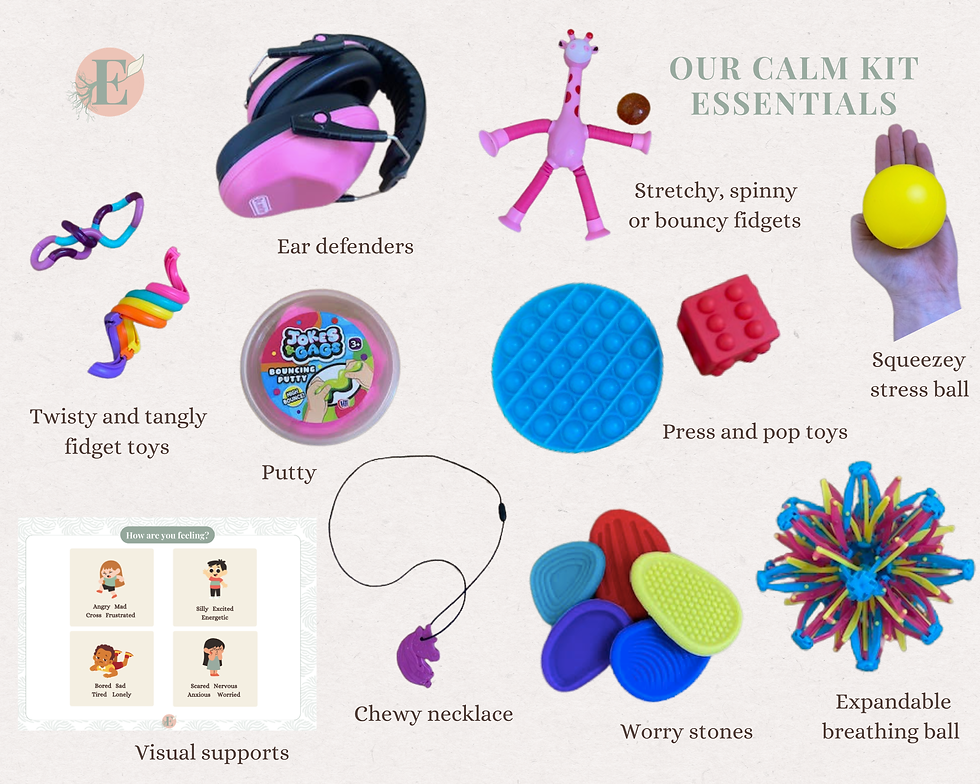
Visual supports available as part of The Children's Hub.
When and How to Introduce a Calm Kit
A calm kit should be introduced when the child is already calm - not in the middle of a meltdown. Take the time to explore the items together, explain what they’re for and model how to use them. This means your child will be better prepared and more confident using the kit, when they actually need it. Ensure that they understand that the calm kit is a positive, supportive thing, not a negative consequence for their behaviour.
Where to Store a Calm Kit (Home and School Ideas)
We need the calm kit to be accessible - it should be easy for a child to reach when they need it.
At home, you might keep it in a quiet corner, a bedroom or a designated ‘calm space’.
In school or nursery, it could be stored on a particular desk or safe area agreed with staff. The goal is to make it feel like a safe, go-to resource rather than something hidden away.
Supporting a child through big emotions isn’t always easy - but having the right tools in place can make a real difference. A calm kit is a simple yet powerful way to help children feel more in control, understood and supported.
If you’d like more practical strategies, resources and guidance around children’s emotional wellbeing, you can explore more over at The Children’s Hub - a gentle space where children learn about big feelings.
Hi, I’m Emma, Early Childhood Expert and founder of Everyday. My goal is simple: help parents understand their children better so every stage feels a little easier.
If this post was helpful, I’d love to keep sharing more like it. Subscribe to stay in the loop!


Comments